How Permanent LED Lights Setup Adds Elegance, Safety And Security, and Benefit
A well-lit home changes character after sunset. Rooflines hone, stone and siding pick up texture, walkways come to be less complicated to comply with, and the whole residential or commercial property really feels extra completed. Great exterior lights has actually constantly done that, however, for years homeowners had to pick between two imperfect alternatives: temporary seasonal lights that looked festive for a few weeks, or standard landscape lights that took care of only part https://hardwiredfixturesetup064.zenbloomer.com/posts/the-ultimate-guide-to-permanent-holiday-lights-for-modern-homeowners of the work. Long-term LED Lights Installation has actually changed that equation.
Done effectively, it provides a home a versatile illumination system that looks subtle on common evenings, commemorative throughout vacations, and practical when safety matters most. It is one of those upgrades that appears ornamental initially, then swiftly verifies itself in daily usage. Property owners normally start by desiring a cleaner option to climbing up ladders each year. They end up appreciating the curb appeal, the lowered maintenance, and the simple convenience of drawing right into a well-lit driveway on a dark evening.
The allure is not simply comfort. It is the combination of elegance, safety and security, and control, all constructed right into the structure of the home as opposed to hanging from it as an afterthought.
Why permanent lighting feels different from short-term lights
Most individuals recognize what momentary holiday illumination appears like when it is set up in a hurry. Wires sag a little. Clips change. A couple of areas stop working at the worst time. Colors rarely look the very same from one bulb to the next, particularly after a season or two of storage space in a warm garage. The setup may still bring pleasure, yet it often looks precisely like what it is: a short-term system.
Permanent Vacation Lighting job in different ways since they are made as component of the home's exterior as opposed to something draped over it. The very best systems put neatly under soffits or along building lines to make sure that the fixtures stay virtually invisible during the day. At night, the light appears ahead from your home itself. That produces a much more refined impact, one that feels deliberate rather than seasonal.
This issues more than lots of house owners anticipate. Outside upgrades are frequently judged by whether they improve the look of a building even when they are not proactively in operation. A long-term system can do that because the hardware is very discreet. You are not looking at dangling cables in January or battling bins back into storage space in February. The illumination is simply there, prepared when needed.
That preparedness alters the connection people have with exterior lighting. Rather than asking, "Is it worth the difficulty to put lights up this year?" they begin asking, "What do we want your house to appear like this weekend break?" That is a very different sort of ownership experience.
The aesthetic upgrade surpasses holidays
A great deal of house owners initial read about long-term systems through vacation screens, and that makes sense. Seasonal lighting is psychological. It marks family members traditions, gatherings, and unique times of year. But once people see what these systems can do on normal evenings, the year-round worth ends up being clear.
One of the most preferred setups is not remarkable in all. It is a restrained, sophisticated pattern utilizing Traditional Warm Soft Lights along the roofline and heights. That appearance flatters practically every architectural design, from brick colonials to contemporary farmhouses to stucco homes in warmer environments. Warm tones are much easier on the eyes than extreme blue-white light, and they often tend to complement landscape design, natural timber, and stonework much better.
Subtle lighting can make a residence appear a lot more costly without making it louder. It selects eaves, dormers, and entranceways in such a way that helps the framework checked out plainly in the evening. If the system is zoned well, home owners can light just the front altitude on a typical night, after that increase to side gables, outdoor patio lines, or yard enjoyable locations when guests are over.
There is additionally a functional design advantage right here. Typical flood lamps have a tendency to clean a wall surface in wide light, which can squash detail and create glare. Distributed LED points develop meaning. Rather than overwhelming the eye, they lead it. The house looks composed.
That impact is specifically helpful for properties that vanish during the night. Some homes look impressive in daytime but come to be aesthetically confidential after dark because they have only a deck light and a garage fixture. A long-term system provides the home presence after sundown without pressing it into a commercial or extremely staged look.
Safety is frequently the attribute people value most
Homeowners generally shop for permanent lighting since they are tired of mounting temporary lights, yet they frequently wind up speaking most about safety and security when the system remains in place.
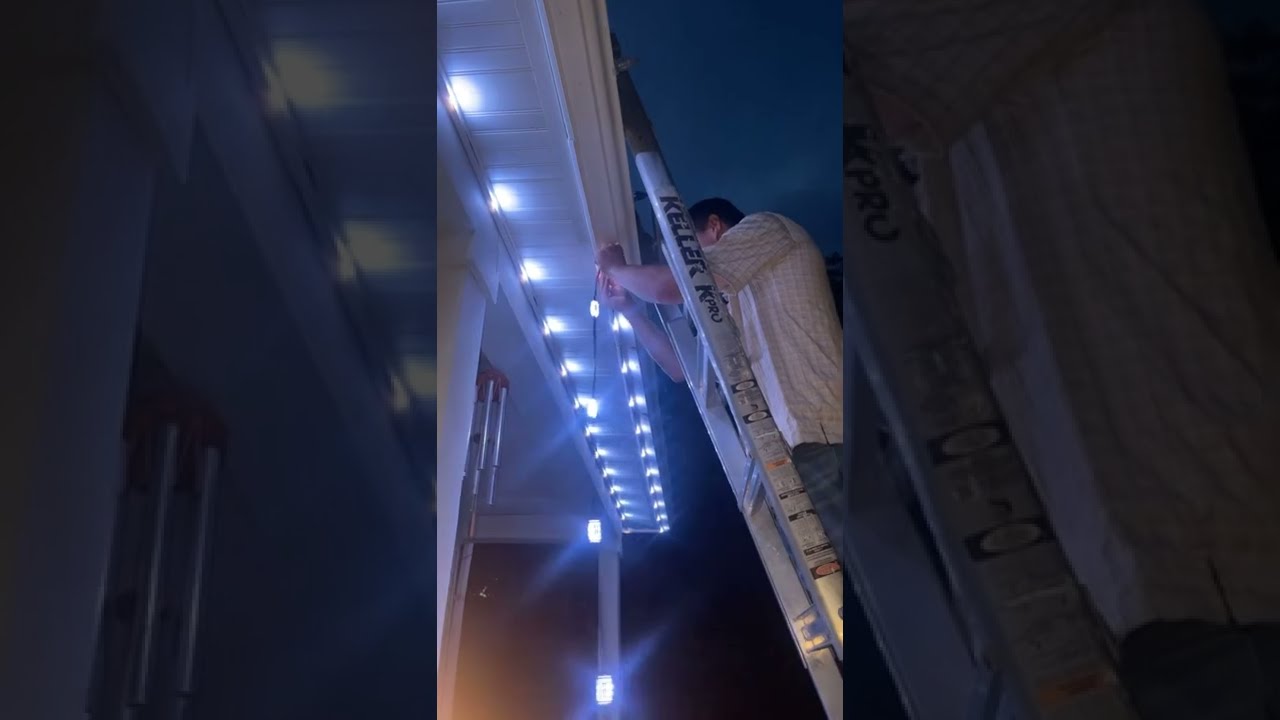
The most apparent safety and security advantage is the one individuals consider initially: say goodbye to repetitive ladder work. Climbing to second-story rooflines with clips, cords, and staples is awkward even for certain DIYers. It becomes riskier in winter, on high pitches, or when leaves and frost make surfaces glossy. Every installer has actually seen instances of makeshift configurations that looked more dangerous than festive. A skillfully installed system reduces that yearly danger to nearly zero.
Then there is the nighttime safety and security of the property itself. A dark front walk, side backyard, or driveway side invites errors. Great building lighting improves exposure without the violence of an activity flooding. Visitors can see where they are going. Delivery vehicle drivers can determine the proper house more conveniently. Relative getting back late feel much less like they are walking right into a blacked-out lot.

Lighting also contributes to viewed safety. It is not an alternative to locks, cameras, or common sense, however homes that are softly and regularly illuminated tend to really feel much less isolated. Dark edges end up being less inviting. Entrance factors are much easier to monitor. A house that is visibly inhabited and well took care of sends out a signal, which signal matters.
There is a balancing act right here, though. More illumination does not immediately indicate more security. Overlit homes can produce glare, deep shadow contrasts, and inflamed neighbors. The better method is layered, controlled light put where it aids individuals see edges, techniques, and entrances. This is another reason specialist design matters. A thoughtful installer will go for feature and restriction, not raw output.
Convenience is where the value substances over time
The real stamina of Permanent LED Lighting Installation shows up month after month. It is not just that you stay clear of carrying boxes out of storage. It is that the system becomes easy to make use of in little, regular ways that make a home extra enjoyable to live in.
One household may use cozy white lights every night with wintertime because sunset comes early and your home feels extra inviting in this way. Another could switch to school colors on video game evenings, softer amber tones for autumn, red and eco-friendly in December, and patriotic themes on national holidays. A couple that entertains outdoors might use the system to specify a patio area border during supper parties, then dim it later in the evening. Someone with aging parents may keep paths and entrance factors lit up on a schedule so no one has to mess up in the dark.
That variety issues because a fixed system ought to not really feel repaired in use. The modern technology is beneficial only if it adjusts to the real world. App control, scene presets, timers, and zoning make that feasible. The most effective configurations are basic enough that any individual in the house can use them without reading a hands-on every single time. If changing a lighting scene feels like configuring an airplane cockpit, the uniqueness wears off quickly.
There is also a seasonal comfort that many individuals overlook. Weather home windows become irrelevant. You do not have to discover a mild Saturday to set up lights prior to a holiday, or rush to remove them after a storm. The lights are already there, straightened, checked, and integrated. That alone can be worth the financial investment for home owners with tall rooflines or requiring schedules.
What a high quality installment actually involves
A solid result depends as much on planning as on the lights themselves. Home owners occasionally think all irreversible systems are generally the same, yet there is a meaningful distinction between a carefully installed building item and a rushed setup that occurs to stay outdoors year-round.
The installer must begin by examining the roofline, trim account, power gain access to, and exposure from the road. Positioning impacts whatever. Mount the components as well low and they come to be obvious during the day. Space them poorly and you get hot areas or unpleasant voids. Overlook the home's geometry and the lighting can make a beautiful home appearance strangely segmented at night.
Cable routing matters also. Tidy wire management is one of the quiet indications of specialist job. Great installers conceal lines, safeguard links from wetness, and stay clear of developing future service headaches. They additionally represent development, weather exposure, and the details product they are connecting to, whether that is aluminum fascia, plastic soffit, block trim, or repainted wood.
Control systems are worthy of equivalent focus. Homeowners should recognize where the power supply will live, how the controller links, what takes place if Wi-Fi is undependable, and just how manual overrides work. These functional information hardly ever appear in extravagant before-and-after pictures, however they have a significant effect on day-to-day satisfaction.
A helpful conversation with an installer usually covers a minimum of these points:
- How noticeable will certainly the components be during daytime from the street and from the yard?
- What color temperature level functions best for daily usage, specifically if the goal is Timeless Cozy Soft Lights rather than intense vacation tones?
- How are power, wiring, and weatherproof links being handled?
- Can the system be zoned so different rooflines or areas operate independently?
- What does solution appear like if an area needs troubleshooting later?
When property owners ask these inquiries early, they tend to get better results. They likewise stay clear of the typical error of purchasing by bulb matter alone. Extra nodes do not constantly create a much better appearance. Layout technique matters more.
Color, warmth, and restriction make the difference
One of the most convenient methods to tell whether a lights design will age well is to take a look at how it takes care of white light. Virtually any kind of system can produce bright colors for a party. The tougher job is making a house look lovely on an ordinary Tuesday in February.
That is where warm-toned everyday scenes gain their keep. Soft amber-white or warm white settings tend to flatter most exteriors and avoid the sterilized feeling that colder illumination can produce. If the objective is elegance as opposed to spectacle, the house should really feel delicately outlined, not electrified.
Many house owners that initially request dazzling displays at some point work out right into a routine where color is for unique events and cozy white does the hefty lifting the remainder of the year. That pattern makes sense. Strong scenes are fun, yet refined light is more livable. It values the neighborhood, pictures better, and stays attractive over the lengthy run.
Restraint also assists residential or commercial property worths in a wider feeling. Outside improvements work best when they enhance design rather than take on it. An irreversible system must give you choices, not press you into utilizing every one of them at once.
Cost, longevity, and what "worth it" really means
The expense of Permanent LED Lights Installment varies widely based on roofline intricacy, system quality, controller attributes, and neighborhood labor rates. A one-story home with a basic front elevation is a different task from a multi-gable two-story home wrapping around a courtyard and backyard enjoyable area. Because of that, sweeping rate cases are not very useful.

A better way to think about worth is to compare what the system changes and what it includes. It changes recurring seasonal installation initiative, repeated acquisitions of temporary strings and clips, storage space problem, and some danger. It adds year-round curb appeal, programmable scenes, much better exposure, and wider usage past holidays.
For some houses, the return is emotional as much as economic. They stop dreading configuration. They get more usage out of their outside rooms. Their home feels ended up every evening. That is difficult to take into a spreadsheet, but it is real.
That said, not every residential property needs a full-system setup. Some homes may profit much more from a simpler combination of landscape lights, access lighting, and a limited long-term roofline accent. Excellent suggestions is rarely topmost. It fits your home, the budget, and just how the family actually lives.
Where permanent lights radiate brightest in everyday life
The greatest systems earn their area not throughout major vacations, but in smaller minutes. A family members gets home after a night game and your home is softly lit. Visitors show up for a birthday celebration supper and promptly find the front path. Grandparents go to during winter season and there is enough light to browse steps confidently. A house owner away on traveling can activate a stylish evening scene so your house never ever appears vacant.
Those moments are common, which is specifically the point. Home upgrades that enhance common life have a tendency to last. They become part of the rhythm of the home instead of an uniqueness function made use of twice a year.
I have actually additionally seen long-term lights resolve visual issues that had nothing to do with vacations. A home with a deep problem from the street can look remote and underwhelming after dark. A properly created roofline system provides it meaning. A modern-day home with sharp geometry can show up level at night unless light traces the forms. Even older homes with moderate architecture can get a feeling of care and existence from underrated illumination.
Common errors property owners can avoid
The biggest errors are typically not technical failures. They are judgment mistakes. Individuals acquire way too much brightness, a lot of colors, or too little layout support. They presume any kind of service provider who can literally attach the system recognizes building lighting. That is not constantly true.
A few patterns come up frequently:
- Choosing brightness based upon display room impacts instead of genuine property scale.
- Ignoring how the system looks in daylight when lights are off.
- Skipping zoning, then being sorry for the all-or-nothing procedure later.
- Treating every altitude the very same as opposed to reacting to architecture.
- Underestimating the value of application usability and solution access.
These are preventable troubles. They come down to slowing down the choice procedure enough to consider day-to-day usage, not just launch-day excitement.
Matching the lighting to the home, not the trend
Styles transform quickly in outside style. What really feels remarkable now can really feel dated in a couple of years. That is one factor irreversible systems must be designed around the style first and fads second.
A traditional brick home typically benefits from softer, cleaner laying out and conservative scene selections. A modern home may support crisper geometry and periodic vibrant color much more conveniently. A woody residential or commercial property might require reduced intensity because darkness in the environments makes the lights check out brighter. A thick neighborhood may ask for even more restriction out of politeness to close-by homes.
This is why permanent lighting functions best when it is thought of as architectural improvement rather than uniqueness illumination. The innovation is just the distribution system. The real goal is to make the residential property more usable and a lot more attractive after dark.
When homeowners approach it this way, they have a tendency to choose far better products, ask better concerns, and wind up with installations they still value years later.
A useful upgrade that individuals utilize more than they expect
Some home enhancements make a splash on the first day and after that fade right into the history. Long-term Holiday Lighting often do the contrary. They look like a particular niche high-end in the beginning, then come to be something homeowners use regularly because the system is easy, versatile, and visually rewarding.
The beauty originates from a home that holds its form and presence after sundown. The safety and security comes from much better presence and much less ladder work. The benefit comes from having illumination all set at the push of a switch instead of buried in storage space bathtubs. Add the choice for classy Timeless Cozy Soft Lights on routine evenings and dynamic scenes when the occasion asks for them, and the upgrade begins to make sense well past the vacation season.
That is the actual assurance of Permanent LED Lighting Installment. It is not practically celebrating much more quickly. It is about offering a home a trusted, polished nighttime identity, one that operates in silent day-to-day moments just as well as it does on unique nights.