Irreversible LED Lighting Installation for Residence That Need Subtle, Spectacular Lighting
A well-lit home has a way of altering how a residential or commercial property really feels long before any person gets to the front door. The ideal exterior illumination can develop building lines, soften dark corners, and make a home look took care of without calling attention to the fixtures themselves. That is why extra house owners are looking beyond momentary hairs and seasonal arrangements and buying Permanent LED Illumination Setup that works every night of the year.
What attracts lots of people in is not the vacation angle, at the very least not initially. It is the promise of control, uniformity, and restraint. You can have a home that shines gently on an ordinary Tuesday in February, moves to an inviting pattern for a backyard dinner in June, and transforms joyful in December without climbing a ladder once. When the system is created well, it does not shout for focus. It simply makes your home appearance better.
That difference issues. There is a big difference between illumination that enhances and illumination that raises. Long-term systems can do both, yet the very best projects start with the second goal.
Why subtle lighting is harder than it looks
The expression "subtle outside lights" sounds easy till you try to attain it. Most homeowners have seen the opposite done badly: harsh identifies under every eave, mismatched shades, hotspots over garage doors, and sufficient illumination to make a residence appearance flattened rather than dimensional. Outside lights is very easy to overdo since LEDs are reliable, portable, and bright. As well intense, in several cases.
The most successful installments have a tendency to borrow from landscape lights principles. As opposed to asking, "How much light can we add?" The far better question is, "What should the eye notification after dark?" On a craftsman-style house, that might be the roofline and access columns. On a modern home, it could be the clean geometry along the fascia and soffits. On a block colonial, the target is often a warm boundary that maintains the home's proportion instead of transforming each architectural component into its very own little spotlight.
This is where Permanent Vacation Lights have matured in a valuable means. Early systems usually leaned heavily into color-changing novelty. Newer, much better systems can definitely do animated vacation scenes, but they also provide refined white tones, dimming control, zoning, and organizing that make them practical as daily architectural lights. For lots of homes, the most-used setup is not red and green in December. It is a low-output, warm white setting at 20 to 40 percent brightness for the various other eleven months.
I have seen house owners are reluctant due to the fact that they visualize a long-term system as aesthetically evident in daylight. That worry is valid, and it needs to be resolved before anything is installed. The very best installments go away. Track color need to very closely match the soffit or fascia. Wire runs must be hidden. Component spacing should comply with the roofline easily rather than requiring unpleasant gaps. If you can stand at the visual at noon and hardly see the system, that is typically a good sign.
The situation for long-term over temporary
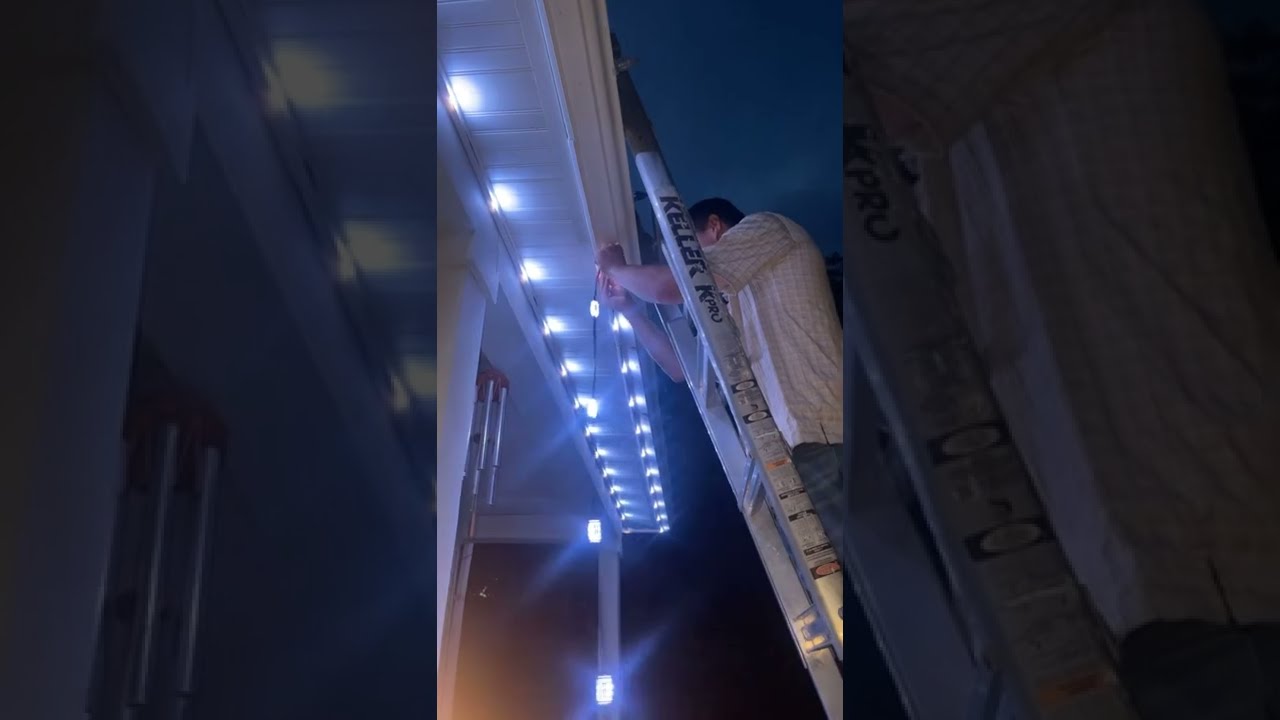
Anyone that has mounted typical holiday lights greater than two times recognizes the routine. Disentangling cords in the garage. Replacing dead light bulbs. Battling clips that snap in the cold. Looking at a high roofline while pretending the ladder angle is risk-free sufficient. Then doing the whole point again backwards a few weeks later.
Permanent systems address that evident frustration, however comfort is just one part of the tale. The larger advantage is integrity paired with style adaptability. As soon as the lights are placed and set, your house obtains a lights layer that can be made use of for vacations, events, video game days, celebrations, security, and everyday visual appeal. That suggests one financial investment serves numerous purposes rather than sitting idle a lot of the year.
There is additionally an expense conversation worth having honestly. An Irreversible LED Illumination Installment is not affordable compared with purchasing a few boxes of momentary lights at a big-box shop. Relying on the dimension of your home, roofing intricacy, control system, ease of access, and whether the project consists of garage lines, heights, gables, and back altitudes, prices can vary from a few thousand bucks into the reduced 5 figures. That stated, several homeowners undervalue what they currently spend in time on substitute strings, clips, storage space bathtubs, expansion cables, timers, and occasional labor. Much more notably, they tend to overlook the cost of time and risk. A steep second-story roofing system is not the location to save cash with a do it yourself compromise.
When people say long-term lighting "pays for itself," I normally push back on the phrase. Not every exterior upgrade requires a strict economic return. This one is commonly extra about lowering hassle, boosting appearance, and obtaining constant use from a system that adjusts to the family. If you are the kind of home owner who values an organized outside and makes use of exterior areas often, the return often tends to feel apparent even if it never fits neatly right into a spreadsheet.
Warm light usually wins
Color-changing capability gets the advertising and marketing interest, however Standard Warm Soft Lights are what make an irreversible system really feel stylish. On many homes, specifically those with rock, brick, wood accents, or warmer paint colors, a soft white in the 2200K to 3000K variety looks richer and more welcoming than a great white. It flatters structure. It creates depth. It makes entranceways really feel occupied instead of showroom-bright.
Cooler whites can deal with some contemporary homes with crisp coatings, but even then, too much blue in the color temperature can make the façade feel sterile. Cozy light often tends to age far better cosmetically. It additionally mixes more naturally with interior light spilling with home windows, deck sconces, and landscape lighting.
Brightness matters equally as much as shade temperature level. I frequently tell property owners that if they can plainly see each and every single diode from the road, the system is most likely too intense for everyday use. Long-term lighting needs to commonly be dimmed for routine evening operation. Save the complete strength for parties or when you want an extra noticeable effect.
An installer with good judgment will certainly not simply ask what colors you such as. They will certainly ask exactly how you live. Do you amuse outdoors? Do you desire the house to feel inviting from the driveway but not dominate the block? Is your community dark and peaceful, or brightly lit with great deals of seasonal screens? Those solutions form the best setups much more than a sales brochure packed with color options.
Where the system ought to go, and where it should not
Roofline lighting is the obvious starting point, however not every side of a house requires illumination. In fact, over-lighting is one of the easiest means to make a costs system look inexpensive. The goal is to develop willful lines, not trace every feasible perimeter.
Front altitudes typically are worthy of the most interest because that is where the home's identity sits. Main rooflines, front-facing gables, deck areas, and garage details are common candidates. Back altitudes depend upon how the backyard is made use of. If there is an outdoor patio, swimming pool location, or exterior kitchen, adding areas to the rear of the house can make good sense. If the back is mostly hidden and rarely utilized after dark, the return may be limited.
Eaves and soffits are popular mounting places since they hide components well and develop a descending laundry or regulated point effect relying on the item. Fascia installments can work also, yet the details matter. You desire sightlines, spacing, and accessory approaches that look intentional in daytime and tidy at night.
Some rooflines deal with the idea. Extremely ornate trim, greatly disturbed lines, or surface areas with bad placing access can produce awkward transitions. High tops might require specific lifts or add labor that transforms the economics of the task. Historical homes likewise are entitled to added treatment. A long-term system can complement an older home beautifully, yet only if the installment appreciates the architecture and does not leave noticeable plastic tracks where they do not belong.
The modern technology behind a polished result
Not all long-term systems are built the very same. The noticeable impact depends on a number of technological choices that property owners seldom see in advertisements.
LED density and spacing identify whether the light reads as a populated pattern or an extra unified architectural line. Closer spacing provides even more control and typically a cleaner appearance, however it can increase price. Lens layout affects spread and glow. Private addressability matters if you want computer animated scenes or accurate shade sections. Dimming high quality matters if you respect cozy, underrated every night usage. Application layout issues since a powerful system comes to be frustrating fast if configuring it feels like operating commercial equipment.
Power delivery additionally is worthy of focus. Longer runs, larger homes, and intricate rooflines might need smart intending around voltage decrease, control placement, and shot factors. This is one reason expert installation issues. A system that looks fine on the first day however establishes irregular illumination, shade drift, or unreliable sectors later on was not really "fine" whatsoever. It was under-engineered.
Weather resistance is an additional location where the information matter. Exterior-rated parts ought to be typical, but ratings alone do not guarantee a long lasting set up. I take note of just how ports are safeguarded, just how penetrations are sealed, exactly how low-voltage lines are directed, and whether the installing surface can manage seasonal expansion and contraction. Freeze-thaw cycles, wind, straight sunlight, and motoring rainfall reveal weak craftsmanship quickly.
What an excellent setup procedure in fact looks like
A polished outcome begins before anybody opens up a ladder. The installer should review the home from multiple angles, not just stand in the driveway and provide a rough guess. They ought to take a look at roofing system height, gain access to, fascia condition, readily available power, existing exterior illumination, and places where the system can hide naturally.
Good business usually simulated up sections of the roofline digitally or at the very least talk through most likely areas and make use of situations in functional terms. That issues due to the fact that property owners commonly assume they desire optimal insurance coverage up until they see just how much cleaner a careful design can look. Even more lights is not immediately far better lighting.
On installation day, neatness matters. Tracks or channels must run directly and real. Corners must be managed with care as opposed to compelled. Control boxes need to be put where they are shielded and functional. Wire management must not look like a second thought. If the staff leaves a home with excellent nighttime pictures yet unpleasant daytime information, the task was just half done.
Programming is the various other fifty percent of the handoff. A permanent system is only useful if the homeowner can really utilize it. I such as to see a few prefabricated scenes set up prior to the staff leaves: a day-to-day cozy white, a weekend break enjoyable setting, a vacation predetermined, and maybe a reduced late-night setting. If the application is loaded with dozens of complex effects yet none of the practical day-to-day scenes are developed, the system frequently goes underused.
Questions worth asking prior to you work with anyone
The most convenient way to find a weak installer is to ask practical inquiries and listen for obscure solutions. You do not require to become a lights designer, however you do require to recognize how the company thinks.
- How visible will the track and electrical wiring be during the day?
- What cozy white range does the system deal, and just how well does it dim?
- How are lengthy runs powered to avoid inconsistent brightness?
- What does the service warranty cover, labor included or parts only?
- Can the system be serviced or expanded later without replacing everything?
The answers should seem details, not practiced. A strong installer can describe compromises clearly. They should fit going over look in daytime, not simply application attributes and vacation animations.
Matching the illumination style to the house
One of one of the most typical blunders in exterior illumination is choosing results that compete with the home's architecture. A residence with standard lines, shutters, and mature landscaping hardly ever take advantage of aggressive motion patterns or extremely saturated shade as a daily setup. It generally looks much better with gentle, warm perimeter illumination. A minimal modern home might bring a cleaner white line or discerning accent shade much more pleasantly, but even there, moderation has a tendency to age better.
Neighborhood context matters as well. In some locations, bold vacation display screens are part of the neighborhood culture, and a programmable roofline fits right in. In quieter communities, a polished appearance has even more endurance. The very best permanent systems allow property owners take part in the joyful side when they intend to, after that return your home to something made up and stylish the remainder of the year.
I keep in mind one property owner who originally desired every roof covering side, dormer, and rear line lit due to the fact that he had actually seen an online video clip filled with significant results. After a short mockup, he altered direction totally. We focused on the main front roofline, the deck return, and the garage framework. After that we established a day-to-day scene with cozy white at reduced output. The outcome made the home look more expensive, not more embellished. A month later he said the surprise was how typically they used the lights outside the vacations. His family liked drawing right into a softly lit house every night. That kind of remark shows up often.
Maintenance is light, not nonexistent
One selling factor of Permanent Vacation Lights is reduced maintenance, which is primarily real. However "irreversible" does not imply "never ever requires attention." Outdoor systems stay in harsh problems. Parts age. Apps upgrade. Trees turn into sightlines. Gutter work or roof covering replacement may require temporary coordination.
The good news is that regular maintenance is typically small if the initial setup was strong. Most home owners mostly need to inspect that schedules still straighten with seasonal sundown modifications, validate the application remains linked after network updates, and occasionally clean noticeable dust or particles from accessible parts if buildup impacts appearance.
A few practical habits aid prolong the life of the system:
- Keep tree branches from massaging against tracks or wiring.
- Test crucial scenes a couple of weeks before major holidays.
- Notify roofers, painters, and seamless gutter staffs that lighting is installed.
- Save app qualifications and scene settings somewhere secure.
- Ask the installer just how service telephone calls are managed prior to you require one.
That has to do with as requiring as it obtains for the majority of homes. Compared with the yearly ritual of hanging and getting rid of momentary hairs, the distinction is significant.
Energy use and operating costs
Homeowners typically think a huge permanent lighting system need to eat an obvious amount of power every night. In technique, LED effectiveness keeps expenses relatively moderate, specifically when the system is performed at reduced brightness for routine usage. Actual power consumption depends upon the number of nodes, brightness degree, shade selection, control design, and nightly timetable, but many homes can run a daily cozy white scene for much less than people expect.
Colorful animated scenes, complete illumination holiday screens, and all-night operation will certainly increase use, of course. So will certainly covering every elevation of a big home. Still, modern LED systems continue to be much more effective than older incandescent vacation lights. The larger cost vehicle driver is almost always installment, not monthly electricity.
This is another factor subtle lighting is so enticing. A controlled, cozy, dimmed setting not only looks far better on the majority of homes, it normally makes use of less energy also. Great layout and effectiveness usually point in the same direction.
When irreversible lights is not the best move
For all their advantages, long-term systems are not universally ideal. If a homeowner likes changing décor designs every season and enjoys the routine of mounting specialized decoration by hand, irreversible roofline lights may not change that experience. If your house is due for major outside improvements, roofing system replacement, or fascia repair service in the future, it may be smarter to wait and incorporate the illumination later. If the home's style offers few tidy mounting opportunities and the installer can not conceal the system effectively, the daytime look might not justify the investment.
Budget is another sincere limiter. If the choice is in between a well-done partial setup and an extended, compromised full-house configuration, I would often select the partial. Beginning with the front elevation where the visual impact is strongest. Increase later on if the system allows. A controlled first stage generally looks better than a sprawling job that exceeds the spending plan and cuts edges on product high quality or workmanship.
The finest results really feel inevitable
That may seem like a strange requirement for lighting, but it is the one I come back to. When a Permanent LED Lighting Installment is done remarkably well, it feels as though your house was always meant to look in this way after dark. The fixtures go away. The illumination really feels determined. The https://outdoorratedlighting862.publishlane.com/posts/20-advantages-of-finding-permanent-vacation-lights-for-your-home cozy tone flatters materials instead of bleaching them. Vacation scenes come to be an option, not the entire identity of the system.
That is why refined, magnificent lighting has actually become the criteria. House owners are not simply getting lights. They are buying control over state of mind, visibility, and visual allure, night after evening, period after season. The best projects appreciate the style, represent day-to-day live, and prioritize Timeless Cozy Soft Lights as much as cheery color. They make a home look more inviting on an average night, which is where a lot of life in fact happens.
If that is the goal, permanent lighting can be among one of the most enjoyable exterior upgrades a homeowner makes. Not because it is fancy, but due to the fact that it quietly improves the method the home is seen and really felt, whenever the sun goes down.